
Choze Powell

Michigan Youth Challenge Academy Graduates Class #45

The Michigan Youth Challenge Academy (MYCA) graduated 107 cadets from around the state at its December 18th ceremony.

Class #45 included cadets from 41 Michigan counties including St. Clair, Macomb, and Lapeer.

U.S. Army Maj. Gen. Paul D. Rogers, adjutant general and director of the Michigan Department of Military and Veterans Affairs, said, “This program is all about giving young men and women a second chance by instilling moral, physical and mental toughness. The accomplishments of these cadets over the past 22 weeks proves they have the fortitude to take their lives in a new direction.”

Cadets at MYCA received over 800 classroom hours credited towards their high school diplomas and 160 hours of vocational experience. The program is voluntary, and provides extra support to youth 16-18 years old who are at risk of not graduating from high school.

Youth interested in joining the next class at MYCA can attend a virtual orientation to see if the program is the right fit for them.

Visit michigan.gov/myca for more information.

Reporting for WGRT – Jessie Wiegand
Omicron Variant Identified in St. Clair County

On December 27th, the St. Clair County Health Department (SCCHD) was notified of three residents with confirmed cases of the Omicron variant. One of the residents tested positive for COVID-19 on December 12th while the other two tested positive on December 13th.

The residents identified have been contacted by the SCCHD and a case investigation is ongoing. Of the three infected, one was unvaccinated and another had a primary vaccination series yet was not eligible for the booster. The third had received a primary vaccination series and booster, although was not yet considered fully boosted as the positive test occurred within 14 days of dose administration.

According to the Centers for Disease Control and Prevention (CDC), the Omicron variant will likely spread more easily, but its overall impact compared to the Delta variant, remains unknown. The CDC expects that anyone with the Omicron infection can spread the virus to others, even if they are vaccinated or don’t have symptoms. Current vaccines are expected to protect against severe illness, hospitalizations, and deaths due to infection with the Omicron variant. Breakthrough infections in people who are fully vaccinated, however, are likely to occur.

“We knew it was a matter of time before the variant was detected in our community. The good news is that we have the tools to help slow the spread by following proven mitigation strategies,” noted Dr. Annette Mercatante, Medical Health Officer of the St. Clair County Health Department.

These include:

  • Vaccination for anyone age 5 and older and a booster shot when eligible
  • Wear a mask in public indoor settings
  • Physically distance from others
  • Stay home whenever symptoms appear
  • Get tested for COVID-19, especially before gatherings
  • Self-isolate properly if you develop symptoms or test positive for COVID-19
  • Wash your hands frequently

Email COVID-19 questions to covid19@stclaircounty.org or call the informational hotline (810) 966-4163. Visit the website www.scchealth.co and follow us on social media @scchdmi.

Submitted by the St. Clair County Health Department

Whitmer Approves Bill Allowing School Personnel to Substitute Teach

In an effort to keep classrooms staffed for the remainder of the 2021-22 school year, Governor Whitmer signed a bill that would allow school personnel with high school diplomas or GEDs to serve as substitute teachers.

House Bill 4294 addresses the shortage of substitute teachers available and makes way for any school employee such as secretaries and paraprofessionals to supervise classrooms as substitute teachers.

According the St. Clair County RESA’s website, regular requirements for substitute teachers include a background check, valid identification, a current or expired Michigan teaching certificate, and official proof of 90 semester hours or 135 quarter hours of credit from a regionally accredited college or university.

The newly signed bill will allow any school district or intermediate school district employee who holds a high school diploma or high school equivalency certificate (E.g. a GED) to serve as a substitute teacher.

If that person’s salary is higher than the rate paid for substitute teaching, they must be compensated at the higher rate. If it is lower, their pay must be increased to the rate paid to substitute teach. According to the bill, employees cannot be terminated if they decline the opportunity to substitute teach.

Whitmer said, “Allowing schools to employ school staff that students know as substitute teachers will help keep school doors open and students learning in the classroom the rest of the school year. I am committed to working with the legislature to develop high-quality solutions to address these staff shortages long-term so that we can ensure that every child is able to access a quality education.”

Reporting for WGRT – Jessie Wiegand


United Way of Sarnia-Lambton Campaign Wrapping Up

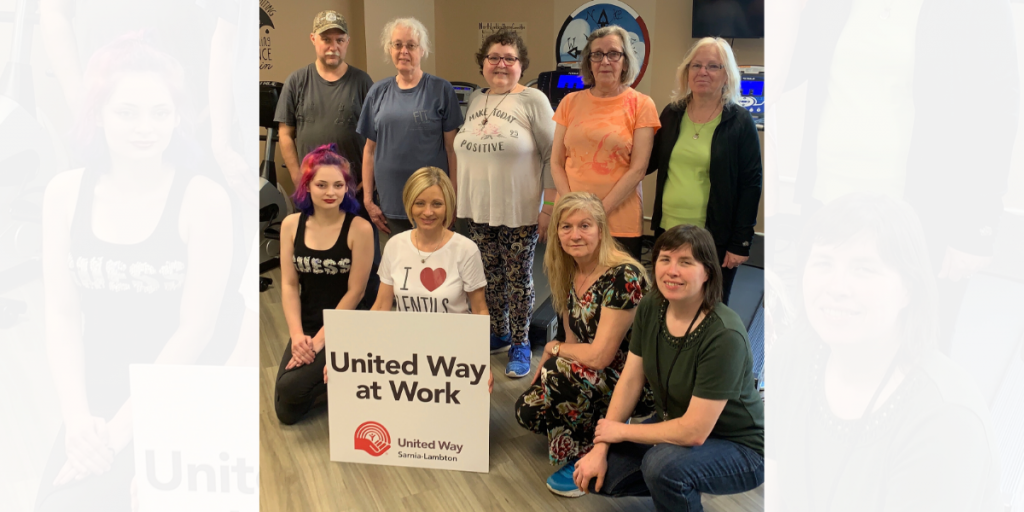
The United Way of Sarnia-Lambton only has a couple of days to reach their fall campaign goal, and it’s not too late to contribute.

The organization needs just over $100,000 to reach the goal of $1,750,000 which supports over 40 programs at 20 different community service agencies in Lambton County.

Vicky Ducharme, Campaign Chair said, “Uniting under the common goal to improve our lives is what really drives our campaign. If you haven’t donated yet, there’s still time. Your gift makes a big impact on our community.”

Although many of the campaign contributions come through workplace payroll deductions at supporting businesses, individuals can also donate on the United Way of Sarnia Lambton’s website here:

www.theunitedway.on.ca.

The priority areas for this campaign are From Poverty to Possibility, All That Kids Can BE, and Healthy People, Strong Communities.

Reporting for WGRT – Jessie Wiegand
 

Watch Out for Catalytic Converter Thieves

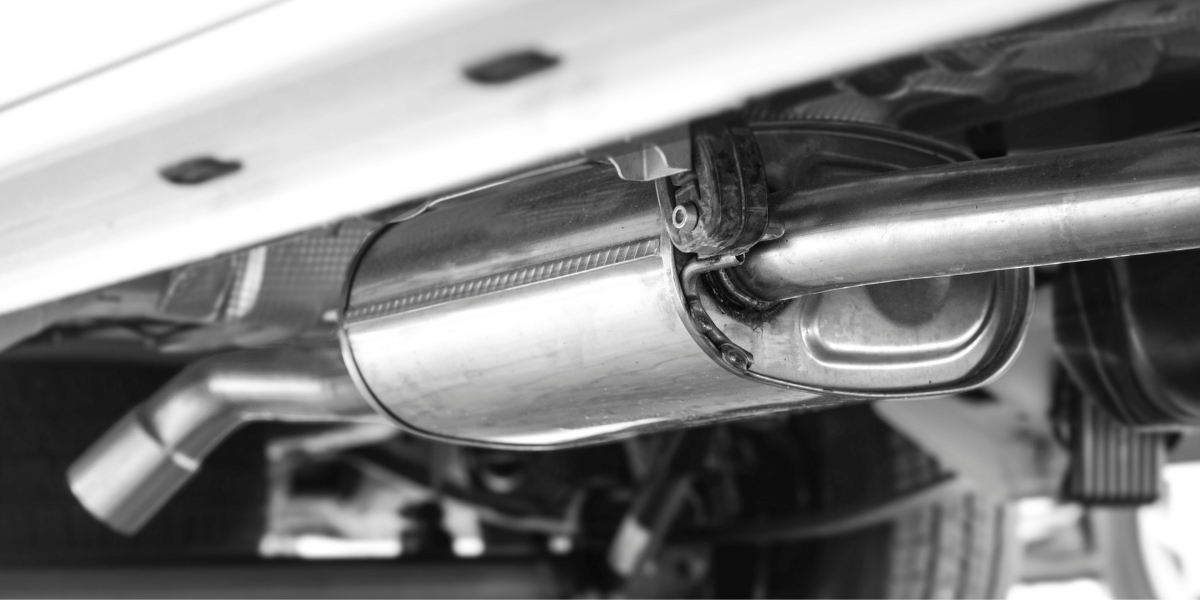
It’s a dirty trick and it’s on the rise. It’s the theft of catalytic converters, which are essential vehicle parts that help to reduce polluting emissions. Thieves sell the stolen parts to scrap metal dealers. The parts from newer hybrid cars contain precious metals and get a higher price at the scrap yard.

Anita Fox, Director of the Michigan Department of Insurance and Financial Services, said that most drivers don’t have coverage for catalytic converter theft on their auto insurance policies. Comprehensive coverage is not mandatory in Michigan.

Fox warned, “Thieves can easily remove these expensive parts from cars and then sell them to recyclers for hundreds of dollars depending on the car’s make and model. In addition to replacing the expensive converter itself, the damage caused by these thefts can be extensive and may cost as much as $3,000, or more, to repair.”

Fox said that an optional comprehensive auto insurance policy can cover the damage.

There are anti-theft devices that can deter theft. Motion detecting lights and other strategies are also recommended to deter catalytic convertor thieves.

Reporting for WGRT – Jennie McClelland

Moved? Change Your Address with Employer, Banks Before Tax Time

Did you change addresses in 2021? If so, be sure to get your address changed with employers and financial institutions.

The Michigan Department of Treasury is reminding taxpayers to take care of address updates in advance of the 2022 income tax filing season to prevent delays in filing returns.

Deputy State Treasurer Glenn White said, “Please take a few moments out of your busy holiday schedule to make sure your address is updated with employers and financial institutions. When the individual income tax processing season opens at the beginning of next year, we will be ready to process your return.”

The Treasury encourages electronic filing over paper returns. Direct debit is available again for this tax filing season.

For those who had their identity compromised, it can be reported to the Treasury so that criminals do not attempt to steal tax refunds.

Michigan taxpayers get an average return of $634. Out of 5 million filers, 3.4 million get money back from the state.

Reporting for WGRT – Jennie McClelland